Drew Burrett - Physics teacher. Crowd sourced, open source text books. Brilliant idea. Physicists are doing it, why can't {insert subject/level of choice here} teachers do it too? See online presentation for more details.
Nick Hood - The motivators of games design applied in the classroom. Described how he got a difficult class motivated and involved. I liked that he gave the badges for things but that although the "badges" were just a number in a spreadsheet, they still motivated! Recommended watching the TED Talk on motivators of games design - I think it was this one:
Awareness of audience - lifting their eyes beyond their own classroom. (The children especially loved seeing the dots appear on the map showing where in the world visitors were coming from.) Choice and personalisation - pupil blogs reflect their own interests. Describes a learning journey - it is not just about recording an end point.
Started with class blogs. Let's parents and others see what is happening in their children's classroom. With younger classes, they used a buddy system where older children typed up what the younger ones wanted to say. The technology use is embedded in the work of the class - the posts are about real work and not stuff invented to tick an ICT task.
Each teacher has a reflective blog where they evaluate and reflect on their own blog. They do this at least once a fortnight. Shared with SMT and a partner of their choice. Leads to a rich, regular evaluation process. Teachers are fully engaged and asked for feedback on their blog posts. As part of their reflection, teachers are linking to pupil blogs as part of the evidence.
Third use of blogs was to move away from just diary entries to pupils using blogs to reflect on their own learning. They personalise the look of their blog and include links to relevant pages for the learning they are describing. They tag their own posts and choose appropriate categories. They do not just describe what they have done but they set target posts and also evaluate their work linking to evidence and peer assessment as appropriate. As well as the posts in the main area, there are pages for each of the four capacities where they link to appropriate posts. A pupil described his blog and presented what he had done very effectively. He said it made him more organised and that it was "fun". {Assessment is fun! - DM}
A pupil asked asked how teachers knew what to teach. The teacher directed him to the Experiences and outcomes on Glow. The pupil then said to the teacher that he had been given the wrong target and that he should be at level 2. {Brilliant!} S pupils now link their personal targets themselves and link them to the My Experiences and Outcomes sections. the outcomes a general but the pupils and teachers set more specific tasks.
The blogs do not just use text. They use a variety of tools including: Voki, Glogster Edu, Anymaking, Graffitimaker, Lego Minimizer, Prezi, Zooburst and they are already looking for more!
How did they start this process?
Started with a whole staff (teachers, admin, support...), whole day training event. The SMT made a commitment to allow teachers the time to do this - time spent on planning and assessment is now allocated to the blogging activities. The school make extensive use of Glow help which they find very useful. Also make extensive use of Big Buddies - the pupils offer the support, it doesn't just come from a teacher. The depute head also makes extensive use of his Personal Learning Network through Twitter.
They now have 11 class blogs, 11 teacher evaluation blogs, approximately 200 pupil blogs, a head teacher blog, the depute's blog and Eco blog (used as part of the school's evidence to get a green flag) and an RRSA blog. They have a policy governing the safe and sensible use of blogs but this document also justifies and explains why they are using blogs and why they are valuable. They have a clear progression of tasks and skills through the school.
The blogs are about communication. About reading and commenting on other people's blogs. Reading as well as writing.
It is having an impact. There are logistical difficulties about looking after 200 blogs but the impact and value is clear.
The depute's blog is: http://blogs.glowscotland.org.uk/cl/abbdiara
Brian Clark - PT Computing, Portabello High School {Live capture of session}
Brian Clark Enhancing Game Design With Blogs
Brian was seconded to Consolarium and involved in a games project with a primary school. He found that teachers felt they lacked the confidence to meet the game design requirements 2-09a outcomes. {See the Technologies document for more detail - DM}. First thing he did was to direct them to the Consolarium area on Glow where there are a series of tutorials and videos. {Note: to see most of the Consolarium links here you need a Glow Login. - DM}
Decided that Scratch was best tool for the children in their primary school. once this was decided they started to build up the capacity in the teachers, to get them up to speed in building games.
What is the game design process?
First stage is character design. When you designing a game, the characters are important - not just the game play. Also, opportunities to extend beyond the game into literacy, creativity, model making, marketing. (Think of the spin offs from established games, for example, comics, movies, novels, ...) Truely Interdisciplinary work, for example, see for example:
"By considering the type of text I am creating, I can select ideas and relevant information, organise these in an appropriate way for my purpose and use suitable vocabulary for my audience. LIT 2-26a" (From the Literacy document.)
Model building and creating assets, see for example TCH 2-14a. Create music and audio effect his other outcomes e.g. EXA 3-17a, 2-18a.
Building the game. This hits Maths outcomes, e.g MNU 2-04a and scaling. At a fairly late stage, we start coding.
Games design therefore brings in a whole load of inter disciplinary tools. Many activities have to take place before you get to the game creation. Real games companies use blogs to communicate internally and as publicity. So, this project got the pupils to use Glow Blogs to log progress (The Room 11 Games Blog - Glow login required) and communicate between teams. (Again, inter-disciplinary, e.g. LIT 2-20a and 2-23a as well as TCH 2-08a) The children used the blogs very effectively to give and act on feedback. Children in the project school choose to write about their work and comment on other people's work. The pupils we getting about 6.5 comments per post! Very impressive level of engagement and useful feedback helped them improve their games.
The opening keynote at the Scottish Learning Festival was fully booked but I thought I'd try to get in anyway... Not only got in but got a seat near the front too. What follows is a live capture of my thoughts/reactions to the Cabinet Secretary for Education and Lifelong Learning, Michael Russell's keynote address.
Mike Russell
Getting ready for the keynote
"Today we are all learners"
He expressed the view that all of us are responsible for making our education system the best that it can be. Praised the dedication of teachers and expressed a desire to work with teachers to improve the life chances of young people. It is ambitious but achievable. Wants to listen and respond to the ideas from teachers on what can be done to improve education.
New National Qualifications.
Every teacher will be able to have their say. Information going into school, SQA meeting with head teachers, and a series of implementation events (one for every subject) will start in May.
{Curses! Moved away from the page to get a photo and lost a chunk of the text I'd typed. Commitment to post 16 is all I remember just now.}
"I am absolutely certain we are creating a better country and a better education system."
Questions
Paul Campell: McCormack Review - Paul questioned the decision not to reduce class sizes further. Said smaller class sizes allow for more creativity in teaching.
{How cool is it that the first question asked came from a fourth year BEd student? And was the only question to get a round of applause. Brilliant!}
Answer: Mr Russell claims to be an advocate of smaller class sizes but says that we cannot ignore the economic situation. He will listen to a range of opinion before making any decision.
Alec Wood: McCormack again - COSLA thinks the main function of teaching should be caring but McCormack disagreed.
Answer: Sat firmly on the fence!
Wendy Graham (From Australia): How do you sustain a system and support educational leaders and empowering people.
Answer: The quality of leadership is what distinguishes excellent schools. The collegiate nature of leadership is one of the strengths of Scottish education. We also need to make people keen to take on leadership roles.
Joe Boyd (Head teacher): Will there be changes to the governance of schools?
Answer: Likely to be informed by Local Authority elections
Paul McGill: How will pupils access two foreign languages in school.
Answer: It will take a number of years to achieve and they are taking advice.
Question: Cutting places in FE?
Answer: There will be enough places. There will, however, be rationalisation and there will be a push to get more for less. Will do it but it will require a creative response.
David Noble: Chartered Teacher. Will he be going into the discussion with George Street research or with McCormack?
Answer: Will take evidence from a variety of sources and have a debate.
Brian Cooklan (Head teacher): Schools have been experiencing efficiency savings and cuts for years. This has lead to a situation where there is a growing inequality between the resources available in different schools. How will this inequity be addressed? Also what about Probationers and new teachers?
Answer: We are now getting to the stage that the supply and demand of teachers are being brought into balance. As for differences between schools - he thinks it is right that we have a strong local element in the school system and would not want to move to a centralised system.
Parent: Wants reassurance about the new exam system.
Answer: He hopes there will be a proper debate and informed thinking rather than scaremongering. Revered to an article in The Scotsman where a journalists was arguing that in CfE, Scotland is doing a good thing. {This article perhaps? - DM}
A week has gone by since the close of the Scottish Learning Festival, so I thought it was well past time time to jot down a few thoughts and impressions.
As always, one of the best things about the Festival is the number of people you meet. I found it difficult to get around the exhibition area because it seemed that every couple of stands, I'd bump into someone else I knew and would stand and chat with them instead of looking at the exhibitors. I met colleagues old and new; former students and current students; friends and acquaintances. I met some virtual friends (from Twitter among other places) in the "real" world for the first time. I even met a virtual person in the shape of BrainPop's Moby - officially now my favourite big orange robot.
Some people I didn't meet but meant to include Mark Pentleton (I saw him briefly at TeachMeet but wanted to go to his stand in the exhibition area) and Alan Yeoman from 2Simple (I've always liked the 2Simple stuff and I'm really impressed with the way they have put so much of it on the web and provided a pile of resources to boot on the Purple Mash site).
I was glad I met Jenny. Despite meeting her last year, I had almost walked past without recognising her; thankfully she said hello to me. Her round table session at TeachMeet was outstandingly good! (John Johnson was impressed too.)
I was also glad to chat to Jamie on the XMA stand. In particular I was really impressed with the new iPod Nano I saw there. I was surprised by how much I wanted one when I saw it as I hadn't been overly impressed with the Nano when just reading about it. It clips onto clothing/ties/lapels/whatever like the shuffle and while playing music it displays the album art. I heard someone say it was like people wearing badges to show what groups they like, except with the Nano, you have a badge that changes with every new track you are listening to.
Apart from the Nano, there wasn't much new that caught my eye in the exhibition. I was vaguely impressed by an LCD Interactive screen that was being touted as an alternative to Interactive Whiteboards. The brightness and colour were hugely impressive as was the viewing angle, but it was a bit too expensive and perhaps a bit too small. However, give it a couple of years...
I've already blogged about the sessions I attended but I want to highlight two in particular:
Sugata Mitra's Keynote. I had heard about Sugata Mitra's Hole In The Wall project but this was the first time I'd heard anything on his ideas of self-organised learning. I tried to capture what he was saying live: The Hole In The Wall: Self Organising Systems in Education.
Stephen Heppell. As always, hugely quotable. (My favourite this year was his complaint about "Dick Turpin Teaching" where teachers "Stand and deliver!"). See my attempt to keep up with him in Why our Young Embrace Technology to Engage in Learning. I love the way Stephen Heppell presents. He doesn't use a linear Powerpoint style but draws on a collection of icons on his desktop that he pulls up when necessary to illustrate what he is talking about. Brilliant.
So another year, another useful Learning festival... and I've still to do a reflective blog on TeachMeet. Hopefully next week.
I was aware of the rapid approach of SLF but since my own talk is nowhere near ready, I've been feeling a bit concerned.
However, seeing some of the things taking shape has fired me up with a bit more enthusiasm. For example I love, SLFtalk, an audio blogging tool that John Johnson and David Noble have put together. (See John's post on SLFtalk.) Loads of good stuff happening, great people to meet and, of course, TeachEat.
Now, if only I can get my session together, I could really look forward to it.
Started by making positive comments about Curriculum for Excellence but also that we call SLF a learning Festival - not a Conference. Leaning should be a part of life, not an added extra.
Started with a canon clip from YouTube.
He asked the audience how many times we thought it had been viewed and started an auction. Bids started at 10,000 and had reached 17 million when Ewan McIntosh shouted out the answer - over 49 million hits! {For the record - my browser was at the spinning beachball stage and was on the verge of loading the results of my YouTube search when Ewan shouted out the answer. He says it's because his MacBook Air is faster than my MacBook Pro. I think it's just he's a better typist!} Can you imagine how the BBC would have reacted to a pitch from this chap? They would not have believed anyone would be interested in watching a clip of a few minutes in length filmed with appalling production values. But he is part of the generation who realise what can be done... at home. A generation infused with the idea that "they can" not that "they want to".
Evidence for England seems to suggest we have reached a performance plateau, that we are not tackling ingrained inequality and that the harder we try to hit the target (by measuring literacy, numercy, etc.) the more we miss the point (which is about collaboration, creativity, co-operation...).
It all comes down to relationships. Standards matter but are we providing young people with the kind of relationships that help children learn. Relationships are built on Care (being treated with dignity...), Recognition (in many secondary schools, children feel only their exam results are valued), Participation (what can learners contribute, not just what they can receive?) and Motivation.
Learning with and by not to and from A collaborative and participative way of learning. Derek Wise headteacher at Cramlington Community High School school, is putting this into practice. Learning is something we do best with other people but that then enables us to learn on our own.
He claimed education was like an egg on a plate. The school is like the yoke and we put all our efforts into getting better yokes. The white is the family and schools find it difficult to work here but perhaps the biggest area is the plate - the pupils' wider social community.
Order and calm: hard and soft power Schools that do this, are not afraid to use hard power because they recognised the need for order and calm. But they recognise this comes from the culture of an institution, not just its rules. This leads to a real care for the social and emotional needs of the pupils. So mentorng schemes etc. were in place. Also, major effort into creating personalised learning. Personalised learning is not just about tools but is about an educational philosophy. Lead to the breaking up of spaces (schools within a school). Place, Timing, Pace and Space. For example, education took place outside the school in an allotment - this made it easier for parents get involved.
More integrated across phase. ("We call it transition, but it is more like disruption.") Big schools that feel small. Software should lead hardware - the software is the educational philosophy. The problem is that often the hardware (the building) leads the education. Wider measures of success. New leadership teams, e.g. more than one head, posts not tied to subject or age...
Parental and family learning. Have to find new ways of engaging parents, e.g. "third spaces" like the allotment. Efforts made to minimise disruption at home. It's about aspiration and ambition - recognising they have to create learning communities not just a service or an institution for some (children). However, headteachers and schools are not really equiped for this. So need to draw in community resources, make school resources available to the community and to disperse the schools into the community. To create learning led cultural change.
Ten ideas to close the gap between where we are and the YouTube generation - creative, productive and per-to-peer. How do we do this without getting into trouble?!
Personal budgets for families at risk. Invest early - the right amount at the right time may avoid the big costs of a crisis later
Emotional resilience for all. Perhaps this should be provided in a family but where it is not schools need to build that capacity.
Break up big schools. There are economies in scale but benefits in smaller schools. So have a school within a school - allows for possibility of getting the attention needed.
National peer learning programme - recognise pupils teaching.
Scrap the summer holidays. We penalise parents who go on holiday when it is inconvenient to us.
Build a capabilities curriculum - learning to learn etc.
The personal challenge. Children not allowed to do things they are already good at.
The community based teacher. Get out into the learning plate.
Individual budgets for potential NEETs.
Schools as productive enterprises. Not just work experiences and work shadowing. What about actually producing things and making money.
{There was supposed to be ten, but I have 11... and I missed his tenth - my eleventh. - DM}
He said we should not dismiss this as too idealistic (as if that was a dirty word). He based this talk on schools that are already doing it - for them it is deeply practical.
The people who have the potential to gain most from innovation are those who are least well served by the current system.
If you treat a school as a rock, the only way to get it from point A to point B is to propel it. If instead you see it as a bird, you could tie it to a rock and throw it! However if it is a flock, the only way you can move it is to put out some water and bird seed!
Reporting on the reslults of a study looking at the impact of the Dr Kawashima games from the Nintendo DS on Maths in school. A small scale study found it had a positive impact on pupils maths skills. The study got a lot of good coverage in the media ("Even the Daily Mail was impressed") although there is still some suspicion (for example, see the BBC interview - "Snake oil?!").
Now reporting on the results of an extended study. Derek talked about Semiotic Domains. In school, teachers and adults have control of the Scool Domain. Children are in it, but they don't have mastery over it. However, in the Games Domain, the children have mastery. The hope is to overlap these domains and let children show what they are good at, but show it in the school domain.
With funding from various sources, they managed to get DS consoles for sixteen schools. They chose schools from four authorities with a geographical spread and a range of socio-economic backgrounds (although, they were weighted towards the lower end of the socio-economic spectrum).
David Miller from the University of Dundee then explained the methodology of the study. They used a randomised control study methodology and stratified randomised sample based on free school meal entitlement (an indicator of socio economic status).
Derek and David found that both the experimental group and the control group showed improvement in their maths ability. Both were statistically significant gains. (Good news for good teaching.) However, the experimental group's improvement was significantly better. Even more impressive was the improvement in the speed of completion where both groups improved but, once again, the experimental group's improvement was even better.
Slightly disappointing was that there was no real change in relation to the pupils' attitude to maths. When asked verbally, they said they thought they were getting better at maths but they didn't record this on the questionnaire form. Perhaps this is back to Semiotic Domain thing - they didn't associate the improvements in the game domain with improvements in the school domain. The researchers wondered if filling in a questionnaire on the DS might help.
They also found that less able children tended to gain more than the more able in terms of accuracy. However, this may be because it is harder to improve if you are already good. The "middle" group showed the most improvement in speed. Also, no difference between boys and girls.
The John Henry effect suggests that since you know you will be tested, a control group tends to over-perform. Obviously there is no way to check this but if there was a John Henry effect, the differences between the groups may actually be greater and the results from the DS trial could be even more impressive.
Lots of other questions were raised. For example, they found truancy/late-coming was reduced - is improved attendance sustained after the novelty has worn off? What other games can be used in schools? Does the increase in processing speed spill over into other areas? What is the potential for ASN or the disaffected? What potential is there for collaborative, shared, work on the DS?
Live blog of Ollie Bray and PC David Gunn at Scottish Learning Festival
Ollie started off taking about the importance of partnership. The programme was developed in partnership with Lothian and Borders Police as well as Young Scot and CEOP and the Think U Know site. David Gunn praised the work of CEOP and the Think U Know site. Seeks to "empower" young people through education and to hold offenders to account. Free resources to all and some extra things for people who have completed the training.
In East Lothian, there are three parent workshops a year and are aiming to have at least ne trained person in each primary school and all secondary guidance staff. Also, all headteachers have had a one hour session. This has helped gain the support of all schools in the authority. They use Hector's World and Cyber Café.
Why start with the parents? Ollie was fielding complaints from parents on a Monday morning about online bullying. In general schools supervise and monitor Internet access. The problems therefore generally come from out of school, so important to raise awareness. A key aspect was marketing to parents. Letters posted to parents (not sent home with children), text messages sent as reminders and advert in local press.
The feeling is that by S3, they think they already know - even if hey don't, so important to educate younger pupils before the bad habits are established.
Education is important because 55% of teenager use the Internet every day, 33% have access in their bedroom. Online gaming is becoming more common and so predators are beginning to hang out in online games. In 2007, 25% said they have spoken with someone online and then met them in real life. They tend not to go on their own 83% take a friend, but the presenters say they have to take an adult.
They talk about the four Cs: Content, Commerce, Contact and {Curses! - missed it :-)} Adults and children tend to use the Internet in different ways. Also, there is a difference between knowledge and wisdom. The children know they shouldn't give out personal information in the street but are not wise enough to see that they are doing that on Bebo. Major issue is that the Internet is going mobile. It is on their phone via free wi-fi connections - moving out of the family home.
Mobile phones and the law. If you take a photo of a person under 18 then legislation applies. Means if they take photos of boy/girlfriends. If they then break up but send these photos to others, they will be committing an offence. Downloading an image counts the same as "making".
Something else children find difficult to understand is that it is almost impossible to delete. See for example the Way Back Machine. Even deleting an image from a phone doesn't get rid of it. Businesses also regularly Google their employees and potential employees.
Parents need educated as to what their children's games machines can do. They may have the machine in a family area, but don't realise what the games machines in their children's rooms can do. Online gaming is pitched at very young children (e.g. penguin world thing in Disney) and Habbo Hotel. These worlds are virtual - can meet friends if you are not allowed out to meet them and can change your appearance - all this is attractive to young people. Yet, Ollie showed excellent machinima video on Habbo hotel showing how easily an inappropriate conversations develop.
Ollie also made the point that some people are inappropriately interested in children but more are interested in theft! If your children give away your address inadvertently and then mention you are going on holiday and then ... :-)
How often do we encourage our pupils? It can get a bit grating to be constantly offering praise. Has to be genuine.
Ewan started by saying it's about the process not the product (Gave example of Katie Melua re-writing song to make it more accurate but poorer love song.) He argued that concentration on final product can lead to mediocrity. He talked about the peer assessment possibilities of blogs.
How do you assess something like Watch the World? Do you just look at the final product?
What are games offering that traditional education doesn't? One thing is "levelling up". The idea of ever expanding challenges. Also the idea of cheat sheets to help people improve. Gives a new way of doing things. Gave the example of Ollie Bray using Guitar Hero as the focus for a Primary/Secondary transition project. They looked at venues for the concert, costs, orienteering round the building, designing guitars in CDT, designing posters in Art, writing biographies in English...
Gamers are getting older - 66% of gamers have children - Nintendads. But are teachers playing games? Ewan suggested teachers are under-represented.
Ewan showed the clip of Tim Rylands teaching. Asked us to consider what was traditional teaching and what was new? How was he praising?
Old: He brought out basic grammar stuff like metaphor and commas. Offered praise. He was relaxed and happy to be in the classroom.
New: Sat amongst the class. Class were in charge of where they went. Lots of noise and comment on what was happening.
The children were upset that the teaching ended.
Tim Ryland makes a game out of using language. See for example the Punctuation Pyramid (grammar as a game) and the Visuwords site that allows you to explore words in a way that beats a thesaurus. Wordle analyses text and makes the most common words appear larger - you can see where words are overused or to get a visual feel for the tense.
Tim also records pupils telling their work while standing in front of the Myst scene they are describing. Can do this for free with iMovie or online with Jumpcut. However, don't devalue the written work. Children need to write to work out the best bits. See also Kim's blog on the writing her children did based on the game Samarost.
Ewan has published all the links and explained himself more clearly on his blog. He also gave some examples of fiction using new media an example from CSI in second life and the BBC river journey on GoogleEarth and the We Tell Stories site. Easy to create your own stories with GoogleEarth like We Tell Stories. Big Art Mob - putting art on the map and street art locator.
Games like Hotel Room Secret - like geocachingfor hotels. Why not let Primary 7 explore a Secondary school by following clues. Threw lots of games like Sharkrunners and WebWars. Also, wormholes into games like the Oceanic Airlines site (with the hidden html message)connected to the Lost programme. Imagine a curriculum based on wormholes!
Disclaimer bit!
Opinions expressed in this blog are not necessarily those of my employer. The use of any copyright terms or material is not a challenge to the ownership of those materials.


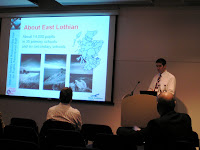 In East Lothian, there are three parent workshops a year and are aiming to have at least ne trained person in each primary school and all secondary guidance staff. Also, all headteachers have had a one hour session. This has helped gain the support of all schools in the authority. They use


 Posts
Posts


 Visitors


