The title of the post is actually the name of a blog by a former student. He is now a "real" teacher and although updates of his blog have been sporadic, he has made two recent posts that chimed with issues I'd been thinking about because of TeachMeet08 and SLF08.
Firstly, his post from 11 September, The new term!, talks about an inter-disciplinary project he's working on based around managing a band. It's about providing context and it looks like he's going to use (is already using?) something like GuitarHero to pull it all together. It is not clear from his post but I'd guess he will move onto designing games as well as playing them.
It's good to see a new S1 course being developed that doesn't assume the pupils know nothing and that doesn't start with, "This is a mouse"! And from a future of Computing as a subject point of view, it's good to see a course being developed that does something current, interesting and engaging.
Secondly, there is his post from 18 September, Desks of the future, where he considers where technology might be going and wonders how schools can keep up. Having just heard Tom Barrett talk about some of the things his school did with the Entertaible, and knowing a bit about what Ian Stuart has been doing in Islay, I know there are other people thinking along similar lines. What will technology look like in the near future and how can schools sustain and develop their use of computers and ICT?
If you've got something to say on these topics, by all means leave a comment here... but even better, why not head over to The best is yet to come and and leave some comments there?
Showing posts with label slf2008. Show all posts
Showing posts with label slf2008. Show all posts
Wednesday, October 01, 2008


Thursday, September 25, 2008
SLF08: The Shape of Things to Come: Personalisation and Collaboration in Education
Live blog from a keynote by Charles Leadbeater at the Scottish Learning Festival.
Started by making positive comments about Curriculum for Excellence but also that we call SLF a learning Festival - not a Conference. Leaning should be a part of life, not an added extra.
Started with a canon clip from YouTube.
He asked the audience how many times we thought it had been viewed and started an auction. Bids started at 10,000 and had reached 17 million when Ewan McIntosh shouted out the answer - over 49 million hits! {For the record - my browser was at the spinning beachball stage and was on the verge of loading the results of my YouTube search when Ewan shouted out the answer. He says it's because his MacBook Air is faster than my MacBook Pro. I think it's just he's a better typist!} Can you imagine how the BBC would have reacted to a pitch from this chap? They would not have believed anyone would be interested in watching a clip of a few minutes in length filmed with appalling production values. But he is part of the generation who realise what can be done... at home. A generation infused with the idea that "they can" not that "they want to".
 Evidence for England seems to suggest we have reached a performance plateau, that we are not tackling ingrained inequality and that the harder we try to hit the target (by measuring literacy, numercy, etc.) the more we miss the point (which is about collaboration, creativity, co-operation...).
It all comes down to relationships.
Standards matter but are we providing young people with the kind of relationships that help children learn. Relationships are built on Care (being treated with dignity...), Recognition (in many secondary schools, children feel only their exam results are valued), Participation (what can learners contribute, not just what they can receive?) and Motivation.
Learning with and by not to and from
A collaborative and participative way of learning. Derek Wise headteacher at Cramlington Community High School school, is putting this into practice. Learning is something we do best with other people but that then enables us to learn on our own.
He claimed education was like an egg on a plate. The school is like the yoke and we put all our efforts into getting better yokes. The white is the family and schools find it difficult to work here but perhaps the biggest area is the plate - the pupils' wider social community.
Order and calm: hard and soft power
Schools that do this, are not afraid to use hard power because they recognised the need for order and calm. But they recognise this comes from the culture of an institution, not just its rules. This leads to a real care for the social and emotional needs of the pupils. So mentorng schemes etc. were in place. Also, major effort into creating personalised learning. Personalised learning is not just about tools but is about an educational philosophy. Lead to the breaking up of spaces (schools within a school). Place, Timing, Pace and Space. For example, education took place outside the school in an allotment - this made it easier for parents get involved.
More integrated across phase. ("We call it transition, but it is more like disruption.") Big schools that feel small. Software should lead hardware - the software is the educational philosophy. The problem is that often the hardware (the building) leads the education. Wider measures of success. New leadership teams, e.g. more than one head, posts not tied to subject or age...
Parental and family learning. Have to find new ways of engaging parents, e.g. "third spaces" like the allotment. Efforts made to minimise disruption at home. It's about aspiration and ambition - recognising they have to create learning communities not just a service or an institution for some (children). However, headteachers and schools are not really equiped for this. So need to draw in community resources, make school resources available to the community and to disperse the schools into the community. To create learning led cultural change.
Ten ideas to close the gap between where we are and the YouTube generation - creative, productive and per-to-peer. How do we do this without getting into trouble?!
The people who have the potential to gain most from innovation are those who are least well served by the current system.
If you treat a school as a rock, the only way to get it from point A to point B is to propel it. If instead you see it as a bird, you could tie it to a rock and throw it! However if it is a flock, the only way you can move it is to put out some water and bird seed!
Started by making positive comments about Curriculum for Excellence but also that we call SLF a learning Festival - not a Conference. Leaning should be a part of life, not an added extra.
Started with a canon clip from YouTube.
He asked the audience how many times we thought it had been viewed and started an auction. Bids started at 10,000 and had reached 17 million when Ewan McIntosh shouted out the answer - over 49 million hits! {For the record - my browser was at the spinning beachball stage and was on the verge of loading the results of my YouTube search when Ewan shouted out the answer. He says it's because his MacBook Air is faster than my MacBook Pro. I think it's just he's a better typist!} Can you imagine how the BBC would have reacted to a pitch from this chap? They would not have believed anyone would be interested in watching a clip of a few minutes in length filmed with appalling production values. But he is part of the generation who realise what can be done... at home. A generation infused with the idea that "they can" not that "they want to".
 Evidence for England seems to suggest we have reached a performance plateau, that we are not tackling ingrained inequality and that the harder we try to hit the target (by measuring literacy, numercy, etc.) the more we miss the point (which is about collaboration, creativity, co-operation...).
It all comes down to relationships.
Standards matter but are we providing young people with the kind of relationships that help children learn. Relationships are built on Care (being treated with dignity...), Recognition (in many secondary schools, children feel only their exam results are valued), Participation (what can learners contribute, not just what they can receive?) and Motivation.
Learning with and by not to and from
A collaborative and participative way of learning. Derek Wise headteacher at Cramlington Community High School school, is putting this into practice. Learning is something we do best with other people but that then enables us to learn on our own.
He claimed education was like an egg on a plate. The school is like the yoke and we put all our efforts into getting better yokes. The white is the family and schools find it difficult to work here but perhaps the biggest area is the plate - the pupils' wider social community.
Order and calm: hard and soft power
Schools that do this, are not afraid to use hard power because they recognised the need for order and calm. But they recognise this comes from the culture of an institution, not just its rules. This leads to a real care for the social and emotional needs of the pupils. So mentorng schemes etc. were in place. Also, major effort into creating personalised learning. Personalised learning is not just about tools but is about an educational philosophy. Lead to the breaking up of spaces (schools within a school). Place, Timing, Pace and Space. For example, education took place outside the school in an allotment - this made it easier for parents get involved.
More integrated across phase. ("We call it transition, but it is more like disruption.") Big schools that feel small. Software should lead hardware - the software is the educational philosophy. The problem is that often the hardware (the building) leads the education. Wider measures of success. New leadership teams, e.g. more than one head, posts not tied to subject or age...
Parental and family learning. Have to find new ways of engaging parents, e.g. "third spaces" like the allotment. Efforts made to minimise disruption at home. It's about aspiration and ambition - recognising they have to create learning communities not just a service or an institution for some (children). However, headteachers and schools are not really equiped for this. So need to draw in community resources, make school resources available to the community and to disperse the schools into the community. To create learning led cultural change.
Ten ideas to close the gap between where we are and the YouTube generation - creative, productive and per-to-peer. How do we do this without getting into trouble?!
- Personal budgets for families at risk. Invest early - the right amount at the right time may avoid the big costs of a crisis later
- Emotional resilience for all. Perhaps this should be provided in a family but where it is not schools need to build that capacity.
- Break up big schools. There are economies in scale but benefits in smaller schools. So have a school within a school - allows for possibility of getting the attention needed.
- National peer learning programme - recognise pupils teaching.
- Scrap the summer holidays. We penalise parents who go on holiday when it is inconvenient to us.
- Build a capabilities curriculum - learning to learn etc.
- The personal challenge. Children not allowed to do things they are already good at.
- The community based teacher. Get out into the learning plate.
- Individual budgets for potential NEETs.
- Schools as productive enterprises. Not just work experiences and work shadowing. What about actually producing things and making money.
- {There was supposed to be ten, but I have 11... and I missed his tenth - my eleventh. - DM}
The people who have the potential to gain most from innovation are those who are least well served by the current system.
If you treat a school as a rock, the only way to get it from point A to point B is to propel it. If instead you see it as a bird, you could tie it to a rock and throw it! However if it is a flock, the only way you can move it is to put out some water and bird seed!
SLF08: Can Nintendo’s Dr. Kawashima impact on mental maths? An extended study
Live Blog from Derek Robertson and David Miller at the Scottish Learning Festival.
 Reporting on the reslults of a study looking at the impact of the Dr Kawashima games from the Nintendo DS on Maths in school. A small scale study found it had a positive impact on pupils maths skills. The study got a lot of good coverage in the media ("Even the Daily Mail was impressed") although there is still some suspicion (for example, see the BBC interview - "Snake oil?!").
Now reporting on the results of an extended study. Derek talked about Semiotic Domains. In school, teachers and adults have control of the Scool Domain. Children are in it, but they don't have mastery over it. However, in the Games Domain, the children have mastery. The hope is to overlap these domains and let children show what they are good at, but show it in the school domain.
With funding from various sources, they managed to get DS consoles for sixteen schools. They chose schools from four authorities with a geographical spread and a range of socio-economic backgrounds (although, they were weighted towards the lower end of the socio-economic spectrum).
David Miller from the University of Dundee then explained the methodology of the study. They used a randomised control study methodology and stratified randomised sample based on free school meal entitlement (an indicator of socio economic status).
 Derek and David found that both the experimental group and the control group showed improvement in their maths ability. Both were statistically significant gains. (Good news for good teaching.) However, the experimental group's improvement was significantly better. Even more impressive was the improvement in the speed of completion where both groups improved but, once again, the experimental group's improvement was even better.
Slightly disappointing was that there was no real change in relation to the pupils' attitude to maths. When asked verbally, they said they thought they were getting better at maths but they didn't record this on the questionnaire form. Perhaps this is back to Semiotic Domain thing - they didn't associate the improvements in the game domain with improvements in the school domain. The researchers wondered if filling in a questionnaire on the DS might help.
They also found that less able children tended to gain more than the more able in terms of accuracy. However, this may be because it is harder to improve if you are already good. The "middle" group showed the most improvement in speed. Also, no difference between boys and girls.
The John Henry effect suggests that since you know you will be tested, a control group tends to over-perform. Obviously there is no way to check this but if there was a John Henry effect, the differences between the groups may actually be greater and the results from the DS trial could be even more impressive.
Lots of other questions were raised. For example, they found truancy/late-coming was reduced - is improved attendance sustained after the novelty has worn off? What other games can be used in schools? Does the increase in processing speed spill over into other areas? What is the potential for ASN or the disaffected? What potential is there for collaborative, shared, work on the DS?
A paper is available from the Consolarium blog.
{Extremely interesting study. Good research evidence. Solid methodology. Fantastic results. Brilliant! - DM}
 Reporting on the reslults of a study looking at the impact of the Dr Kawashima games from the Nintendo DS on Maths in school. A small scale study found it had a positive impact on pupils maths skills. The study got a lot of good coverage in the media ("Even the Daily Mail was impressed") although there is still some suspicion (for example, see the BBC interview - "Snake oil?!").
Now reporting on the results of an extended study. Derek talked about Semiotic Domains. In school, teachers and adults have control of the Scool Domain. Children are in it, but they don't have mastery over it. However, in the Games Domain, the children have mastery. The hope is to overlap these domains and let children show what they are good at, but show it in the school domain.
With funding from various sources, they managed to get DS consoles for sixteen schools. They chose schools from four authorities with a geographical spread and a range of socio-economic backgrounds (although, they were weighted towards the lower end of the socio-economic spectrum).
David Miller from the University of Dundee then explained the methodology of the study. They used a randomised control study methodology and stratified randomised sample based on free school meal entitlement (an indicator of socio economic status).
 Derek and David found that both the experimental group and the control group showed improvement in their maths ability. Both were statistically significant gains. (Good news for good teaching.) However, the experimental group's improvement was significantly better. Even more impressive was the improvement in the speed of completion where both groups improved but, once again, the experimental group's improvement was even better.
Slightly disappointing was that there was no real change in relation to the pupils' attitude to maths. When asked verbally, they said they thought they were getting better at maths but they didn't record this on the questionnaire form. Perhaps this is back to Semiotic Domain thing - they didn't associate the improvements in the game domain with improvements in the school domain. The researchers wondered if filling in a questionnaire on the DS might help.
They also found that less able children tended to gain more than the more able in terms of accuracy. However, this may be because it is harder to improve if you are already good. The "middle" group showed the most improvement in speed. Also, no difference between boys and girls.
The John Henry effect suggests that since you know you will be tested, a control group tends to over-perform. Obviously there is no way to check this but if there was a John Henry effect, the differences between the groups may actually be greater and the results from the DS trial could be even more impressive.
Lots of other questions were raised. For example, they found truancy/late-coming was reduced - is improved attendance sustained after the novelty has worn off? What other games can be used in schools? Does the increase in processing speed spill over into other areas? What is the potential for ASN or the disaffected? What potential is there for collaborative, shared, work on the DS?
A paper is available from the Consolarium blog.
{Extremely interesting study. Good research evidence. Solid methodology. Fantastic results. Brilliant! - DM}
Wednesday, September 24, 2008
SLF08: Internet Safety and Responsible use
Live blog of Ollie Bray and PC David Gunn at Scottish Learning Festival
Ollie started off taking about the importance of partnership. The programme was developed in partnership with Lothian and Borders Police as well as Young Scot and CEOP and the Think U Know site. David Gunn praised the work of CEOP and the Think U Know site. Seeks to "empower" young people through education and to hold offenders to account. Free resources to all and some extra things for people who have completed the training.
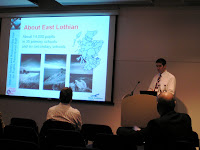 In East Lothian, there are three parent workshops a year and are aiming to have at least ne trained person in each primary school and all secondary guidance staff. Also, all headteachers have had a one hour session. This has helped gain the support of all schools in the authority. They use Hector's World and Cyber Café.
Why start with the parents? Ollie was fielding complaints from parents on a Monday morning about online bullying. In general schools supervise and monitor Internet access. The problems therefore generally come from out of school, so important to raise awareness. A key aspect was marketing to parents. Letters posted to parents (not sent home with children), text messages sent as reminders and advert in local press.
The feeling is that by S3, they think they already know - even if hey don't, so important to educate younger pupils before the bad habits are established.
Lots of other resources include Safer Internet Day and the SQA Int 1 Internet Safety unit.
Education is important because 55% of teenager use the Internet every day, 33% have access in their bedroom. Online gaming is becoming more common and so predators are beginning to hang out in online games. In 2007, 25% said they have spoken with someone online and then met them in real life. They tend not to go on their own 83% take a friend, but the presenters say they have to take an adult.
They talk about the four Cs: Content, Commerce, Contact and {Curses! - missed it :-)} Adults and children tend to use the Internet in different ways. Also, there is a difference between knowledge and wisdom. The children know they shouldn't give out personal information in the street but are not wise enough to see that they are doing that on Bebo. Major issue is that the Internet is going mobile. It is on their phone via free wi-fi connections - moving out of the family home.
Mobile phones and the law. If you take a photo of a person under 18 then legislation applies. Means if they take photos of boy/girlfriends. If they then break up but send these photos to others, they will be committing an offence. Downloading an image counts the same as "making".
Something else children find difficult to understand is that it is almost impossible to delete. See for example the Way Back Machine. Even deleting an image from a phone doesn't get rid of it. Businesses also regularly Google their employees and potential employees.
Parents need educated as to what their children's games machines can do. They may have the machine in a family area, but don't realise what the games machines in their children's rooms can do. Online gaming is pitched at very young children (e.g. penguin world thing in Disney) and Habbo Hotel. These worlds are virtual - can meet friends if you are not allowed out to meet them and can change your appearance - all this is attractive to young people. Yet, Ollie showed excellent machinima video on Habbo hotel showing how easily an inappropriate conversations develop.
Ollie also made the point that some people are inappropriately interested in children but more are interested in theft! If your children give away your address inadvertently and then mention you are going on holiday and then ... :-)
Ollie started off taking about the importance of partnership. The programme was developed in partnership with Lothian and Borders Police as well as Young Scot and CEOP and the Think U Know site. David Gunn praised the work of CEOP and the Think U Know site. Seeks to "empower" young people through education and to hold offenders to account. Free resources to all and some extra things for people who have completed the training.
In East Lothian, there are three parent workshops a year and are aiming to have at least ne trained person in each primary school and all secondary guidance staff. Also, all headteachers have had a one hour session. This has helped gain the support of all schools in the authority. They use Hector's World and Cyber Café.Why start with the parents? Ollie was fielding complaints from parents on a Monday morning about online bullying. In general schools supervise and monitor Internet access. The problems therefore generally come from out of school, so important to raise awareness. A key aspect was marketing to parents. Letters posted to parents (not sent home with children), text messages sent as reminders and advert in local press.
The feeling is that by S3, they think they already know - even if hey don't, so important to educate younger pupils before the bad habits are established.
Lots of other resources include Safer Internet Day and the SQA Int 1 Internet Safety unit.
Education is important because 55% of teenager use the Internet every day, 33% have access in their bedroom. Online gaming is becoming more common and so predators are beginning to hang out in online games. In 2007, 25% said they have spoken with someone online and then met them in real life. They tend not to go on their own 83% take a friend, but the presenters say they have to take an adult.
They talk about the four Cs: Content, Commerce, Contact and {Curses! - missed it :-)} Adults and children tend to use the Internet in different ways. Also, there is a difference between knowledge and wisdom. The children know they shouldn't give out personal information in the street but are not wise enough to see that they are doing that on Bebo. Major issue is that the Internet is going mobile. It is on their phone via free wi-fi connections - moving out of the family home.
Mobile phones and the law. If you take a photo of a person under 18 then legislation applies. Means if they take photos of boy/girlfriends. If they then break up but send these photos to others, they will be committing an offence. Downloading an image counts the same as "making".
Something else children find difficult to understand is that it is almost impossible to delete. See for example the Way Back Machine. Even deleting an image from a phone doesn't get rid of it. Businesses also regularly Google their employees and potential employees.
Parents need educated as to what their children's games machines can do. They may have the machine in a family area, but don't realise what the games machines in their children's rooms can do. Online gaming is pitched at very young children (e.g. penguin world thing in Disney) and Habbo Hotel. These worlds are virtual - can meet friends if you are not allowed out to meet them and can change your appearance - all this is attractive to young people. Yet, Ollie showed excellent machinima video on Habbo hotel showing how easily an inappropriate conversations develop.
Ollie also made the point that some people are inappropriately interested in children but more are interested in theft! If your children give away your address inadvertently and then mention you are going on holiday and then ... :-)
See aso BBC news on Police swoop on networking sites.
SLF08: Thinking Out of the XBox
Live Blog of Ewan McIntosh's session at SLF.
 How often do we encourage our pupils? It can get a bit grating to be constantly offering praise. Has to be genuine.
Ewan started by saying it's about the process not the product (Gave example of Katie Melua re-writing song to make it more accurate but poorer love song.) He argued that concentration on final product can lead to mediocrity. He talked about the peer assessment possibilities of blogs.
How do you assess something like Watch the World? Do you just look at the final product?
What are games offering that traditional education doesn't? One thing is "levelling up". The idea of ever expanding challenges. Also the idea of cheat sheets to help people improve. Gives a new way of doing things. Gave the example of Ollie Bray using Guitar Hero as the focus for a Primary/Secondary transition project. They looked at venues for the concert, costs, orienteering round the building, designing guitars in CDT, designing posters in Art, writing biographies in English...
Gamers are getting older - 66% of gamers have children - Nintendads. But are teachers playing games? Ewan suggested teachers are under-represented.
Ewan showed the clip of Tim Rylands teaching. Asked us to consider what was traditional teaching and what was new? How was he praising?
 How often do we encourage our pupils? It can get a bit grating to be constantly offering praise. Has to be genuine.
Ewan started by saying it's about the process not the product (Gave example of Katie Melua re-writing song to make it more accurate but poorer love song.) He argued that concentration on final product can lead to mediocrity. He talked about the peer assessment possibilities of blogs.
How do you assess something like Watch the World? Do you just look at the final product?
What are games offering that traditional education doesn't? One thing is "levelling up". The idea of ever expanding challenges. Also the idea of cheat sheets to help people improve. Gives a new way of doing things. Gave the example of Ollie Bray using Guitar Hero as the focus for a Primary/Secondary transition project. They looked at venues for the concert, costs, orienteering round the building, designing guitars in CDT, designing posters in Art, writing biographies in English...
Gamers are getting older - 66% of gamers have children - Nintendads. But are teachers playing games? Ewan suggested teachers are under-represented.
Ewan showed the clip of Tim Rylands teaching. Asked us to consider what was traditional teaching and what was new? How was he praising?
Old: He brought out basic grammar stuff like metaphor and commas. Offered praise. He was relaxed and happy to be in the classroom.
New: Sat amongst the class. Class were in charge of where they went. Lots of noise and comment on what was happening.
The children were upset that the teaching ended.
Tim Ryland makes a game out of using language. See for example the Punctuation Pyramid (grammar as a game) and the Visuwords site that allows you to explore words in a way that beats a thesaurus. Wordle analyses text and makes the most common words appear larger - you can see where words are overused or to get a visual feel for the tense.
Tim also records pupils telling their work while standing in front of the Myst scene they are describing. Can do this for free with iMovie or online with Jumpcut. However, don't devalue the written work. Children need to write to work out the best bits. See also Kim's blog on the writing her children did based on the game Samarost.
Ewan has published all the links and explained himself more clearly on his blog. He also gave some examples of fiction using new media an example from CSI in second life and the BBC river journey on GoogleEarth and the We Tell Stories site. Easy to create your own stories with GoogleEarth like We Tell Stories. Big Art Mob - putting art on the map and street art locator.
Games like Hotel Room Secret - like geocachingfor hotels. Why not let Primary 7 explore a Secondary school by following clues. Threw lots of games like Sharkrunners and WebWars. Also, wormholes into games like the Oceanic Airlines site (with the hidden html message)connected to the Lost programme. Imagine a curriculum based on wormholes!
New: Sat amongst the class. Class were in charge of where they went. Lots of noise and comment on what was happening.
The children were upset that the teaching ended.
Tim Ryland makes a game out of using language. See for example the Punctuation Pyramid (grammar as a game) and the Visuwords site that allows you to explore words in a way that beats a thesaurus. Wordle analyses text and makes the most common words appear larger - you can see where words are overused or to get a visual feel for the tense.
Tim also records pupils telling their work while standing in front of the Myst scene they are describing. Can do this for free with iMovie or online with Jumpcut. However, don't devalue the written work. Children need to write to work out the best bits. See also Kim's blog on the writing her children did based on the game Samarost.
Ewan has published all the links and explained himself more clearly on his blog. He also gave some examples of fiction using new media an example from CSI in second life and the BBC river journey on GoogleEarth and the We Tell Stories site. Easy to create your own stories with GoogleEarth like We Tell Stories. Big Art Mob - putting art on the map and street art locator.
Games like Hotel Room Secret - like geocachingfor hotels. Why not let Primary 7 explore a Secondary school by following clues. Threw lots of games like Sharkrunners and WebWars. Also, wormholes into games like the Oceanic Airlines site (with the hidden html message)connected to the Lost programme. Imagine a curriculum based on wormholes!
Thursday, September 04, 2008
Imagine you threw a party...
...and all your RSS feeds turned up!
If I remember correctly, this is a quote from a David Warlick podcast. If you see your RSS feed as an extended set of fellow explorers and learners, finding them all at the same party could be exciting (assuming you find learning exciting!). That certainly describes the feeling I got the when I attended the first TeachMeet at SETT. The group of people assembled, and the stuff we talked about, means it remains in my mind as one of the best learning events I have ever attended.
I'm pleased to say therefore that planning is now underway for TeachMeet08 @ The Scottish Learning Festival (9th edition). If you want to be excited about learning, head to the TeachMeet wiki and get involved!
If I remember correctly, this is a quote from a David Warlick podcast. If you see your RSS feed as an extended set of fellow explorers and learners, finding them all at the same party could be exciting (assuming you find learning exciting!). That certainly describes the feeling I got the when I attended the first TeachMeet at SETT. The group of people assembled, and the stuff we talked about, means it remains in my mind as one of the best learning events I have ever attended.

I'm pleased to say therefore that planning is now underway for TeachMeet08 @ The Scottish Learning Festival (9th edition). If you want to be excited about learning, head to the TeachMeet wiki and get involved!
Subscribe to:
Posts (Atom)


 Posts
Posts


 Visitors


